About Me

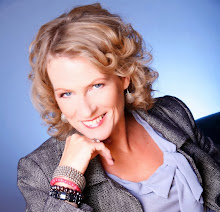
My photo
The business bit: I have had 25 years experience in the IT sector encompassing equipment finance to computer recycling. The coaching bit: is about delivering business mentoring and personal performance coaching. My clients range from senior executives to the unemployed and I delight in working with them all to build excellence and promote growth. My specialisms are working with business leaders and entrepreneurs who want to grow their businesses and enjoy themselves in the process, and helping individuals to realise their full potential. I also work with young people to build confidence and life skills so they can grasp life's opportunities and make the right life choices.

Tuesday, 20 May 2014

Are you doing what you love?

Everyone has choices - everyone is accountable for what happens to them - everyone can be their own enabler.

Easy to say, and not always so easy to do.  Our lives are affected by our environment, our circumstances, the people we are involved with, and all of this impacts on the decisions we make and the direction our lives take.  So how many of us are doing something we love, or even just like, in our daily work activity?  If you were to ask any successful entrepreneur they would say that an essential part of their success was in pursuing something about which they are passionate. 

Therein lies the crux - is it essential to do what you are passionate about, or to do something passionately?  Here is an interesting viewpoint from Miya Tokumitsu on the 'Do What You Love' theory of work:
"DWYL is a secret handshake of the privileged and a worldview that disguises its elitism as noble self-betterment. According to this way of thinking, labor is not something one does for compensation but is an act of love. If profit doesn't happen to follow, presumably it is because the worker's passion and determination were insufficient. Its real achievement is making workers believe their labor serves the self and not the marketplace.
We don't all get to do what we want to do (however if you would like to try, then get in touch) .  The drivers for our work are often needs rather than desires.  Is it just the case that only those with a financially secure base can afford to do what they love, or can this be anyone?    And does our society value those who follow that route less than those who follow the path of need and obligation?  It would be great to see the best path being the one where you do your work with passion even if you are not passionate about it - wow, that would be something!  Here's Pugh's view...


Tuesday, 14 January 2014

Invest to Grow


Business gurus in the know are advising small and micro firms to invest in their businesses in 2014 to ensure growth and maintain market presence and sales.

Alongside this advice are statistics showing that businesses which seek external advice are more likely to succeed: the FSB stated that "research has shown that 70% of small businesses that receive mentoring survive for five years or more which is double the rate compared with non-mentored entrepreneurs".  Data from the BIS Small Business Survey 2012 shows that medium sized businesses are more likely to seek business advice than SME's. And 68% of the SME employers canvassed for the survey intend to grow their businesses over the next 2 to 3 years, with 60% focusing on developing leadership capability, 65% on developing new products or services and 74% by increasing their workforce skills.

So for those smaller and micro businesses not to lose out on valuable external business advice,  it is worth pointing out that business advice does not need to cost a fortune.  Carefully selected, clearly scoped coaching or mentoring with agreed outcomes can be a worthwhile investment.  Growth Accelerator is offering workshops for micro businesses with between 1-4 employees to explore routes to growth without great expenditure.  Ready for Business offers business plan support for start-ups and the new Enterprise Nation initiative will provide a supportive community for enterprising business owners.  Find out more about any of these schemes, and how business coaching can be a valuable development tool, by contacting Yourcoaching isla@yourcoaching.co.uk

Monday, 9 December 2013

HESTONWORLD

Heston Blumenthal is pretty successful  - chef, restaurateur, author, television personality - and he is hyper busy with a more than heavyweight schedule that is enough to make mere mortals reach for the smelling salts.  However he has quoted that "Just because I have done 120 hours a week doesn't mean that's the best way to do it."

And herein lies the nugget - is it really necessary to prostrate ourselves with industry and rushing around and 'doing'? Certainly it seems to be a bit trendy.  There are articles popping up all over the place mentioning witty acronyms like FOMO (fear of missing out) and SHARENTS (parents who have to share the wondrous mega achievements of their kids) and concepts such as 'Out-interesting' others (what it says on the tin).

This all rather smacks of reducing our lives to a list of goals and overachieving rather than finding a balance and sticking to our true values and motivations.  If you feel the pressure to 'out-do', 'over-excel', 'out perform' or you realise you are stringing yourself up on being in some way better or bigger it might not be that you are just trying to show off, but rather that you have got caught up in this increasingly ridiculous myth of 'doing'.  Maybe you should be looking at the real WHY of what you have set yourself to do.  It isn't just about being seen to be doing so much all the time, there isn't anything particularly impressive about overarching busyness.  Reflect instead on the real meaning and purpose of why you are pursuing those goals.  

And what better time to do this than in the festive season? Think 'Silent Night'... all is peace, all is calm....


Tuesday, 24 September 2013

Pascal's Wager - a good bet?

What a clever bloke Pascal was

Settle down and concentrate on this one.....Pascal's Wager was about whether or not there is a God. If you wager against there being a God and there IS a God, that is bad news for you, so you should wager for there being a God.  Pascal believed that religious belief was not a rational, but rather an existential  choice, i.e. a choice you make in the face of uncertainty.  So how do we make the right choice if we aren't basing it on a betting outcome? 

We have talked about uncertainty before and one of the things that comes up a lot in building the ability to make choices in an uncertain world, is to think about two things; 

  • Firstly, do you HAVE to make that decision at that particular time?  Sometimes we get hung up on making choices and decisions, when what we might need is a little time to step away from the decision making process, clear some mental space and let the ideas and emotions free reign, leading to those moments of enlightenment that help us make the right choices.
  • Secondly, it is okay to change what you are oding if things don't feel right or go the way you intended.  Someone mentioned recently that one of the reasons Angela Merkel keeps being re-elected is that she is not rigid in her political life. She is very determined but  she tries to see things from different perspectives (even her opponent's standpoint) and be collaborative and she is not afraid to change the way she does things if it will help her achieve her objectives.   

If you want a gently challenging hand in making your choices or checking the odds get in touch and we'll help you lay your bets.   Or you can visit our website to get some ideas.

Friday, 12 April 2013

Women at the Top.....again 

We have had the 'leaning in' argument from Sheryl Sandberg, (read this for an interesting male response to her talk) and then there is Marissa Mayer telling us we can have it all.  It is all quite exhausting listening to these highly successful and powerful women telling us what we should be doing.  

Now Bea Perez, Coca-Cola's chief sustainability officer has joined the fray, saying that women entrepreneurs need to be more visible.  "Investing in women is one of the most powerful ways to spur sustainable economic growth and development" she said at Coca-Cola's webchat for their 5by20 initiative.  5by20 aims to support the economic empowerment of five million female entrepreneurs across the Coca-Cola value chain by 2010.  A noble and worthy objective and particularly as it is working with small businesses across 200 countries.  

What is nice about this initiative is that it isn't all just about women at the top of massive global organisations who can afford to open a creche facility in their company because they are the CEO, or who have an army of help at home, or whose partners are prepared to fill all the gaps left by these powerful women in their demanding working days.  It is about women at all levels and this makes the Coca-Cola initiative really interesting.  We are going to keep our eye on it!


Wednesday, 6 February 2013

Being Bossy

We've previously talked about the nature of a good leader.  Oliver James has now related the Dark Triad of personalities to 3 types of boss:  the psychopath, the Macchiavelli and the narcissist.

This is a little worrying.  Particularly as it seems that any one of these types will probably manifest behaviours from the other two types as well. Let's look at the first type, the psychopath.  There are going to be elements of this profile that lend themselves well to being a good leader, being cunning and charming for example, and having the ability to be detached and remorseless.  However most psychopaths are of average intelligence, are untruthful and unreliable, and display poor judgement as well as being pathologically egocentric.  Not such great leadership behaviours.

What about the narcissist?  Being conceited, argumentative and selfish don't seem to put one in the front line for promotion to leadership.  Neither does expecting constant praise and admiration or expressing disdain for those you believe to be lesser mortals than you.  And as for Macchiavelli, well the man himself got on in life through his willingness and aptitude for deceit, manipulation and exploitation to gain and maintain power. 


So why do our leaders exhibit these personality types?  What is it that allows them to 'get on' and us to support them? 

All three of these types are closely associated with charisma. Macchiavellians exercise control over close relations in order to achieve their aims and they gain popularity as a result of an ability to create a desirable image that is in fact distinct from who they are, but which appeals to others.  Psychopaths are disarming and can seem to be fearlessly heroic which attracts others to them.  David T. Lykken in his book 'The Antisocial Personalities' observed that Lyndon Baines Johnson and Winston Churchill were "daring, unconventional youngsters who began by playing by their own rules" before becoming successful leaders.   Narcissistic leaders are dominant and self-confident with a sense of entitlement.  Research done in Silicon Valley revealed that narcissistic business leaders there earned more and stayed in their jobs longer.   Being action oriented and goal focused can be an appealing trait in a boss.

Whether or not we think Bill Gates, General Petraeus and Winston Churchill are examples of any of these personality types, we might be best served to look at what elements of their personalities have served us well, how those elements might be emulated and how they can inform us to recognise and nurture better leaders in the future.  Lots of scope for innovative thinking there for leadership and management training!  Meanwhile, if you fancy doing your own Meta Profile test, get in touch.


Monday, 15 October 2012

Whatchya got?


What is this thing about ‘having stuff’?  Is it a bit to do with Hegel’s idea that a person has a natural existence partly within himself and partly of such a kind that he is related to it as to an external world.  So by virtue of owning and having things we are partly building our existence in relation to our possessions?

Do we want our possessions to do our talking for us?  Does what we have validate us? Why does it have to?  What is so particularly human about the way we want things?  Should we worry about when our possessions and the getting of them starts to control us and get in the way of our moving forward?

One of the Mahavratas (great vows) in the Yoga Sutra is the principle of Aparigraha - non-possession, that no-one possesses anything.  It doesn’t deny the existence of the concept of possession, rather it promotes the idea of only taking what one needs from the world.  Andrew Hyde personifies the modern idea of getting rid of stuff:  “When we were growing up didn’t we all have the goal of a huge house full of things?  I found a far greater quality of life by rejecting things as a gauge of success".  

Our lives are led by a consumer based notion of happiness.  Having stuff makes us feel better, bigger, more successful, grander....or at least that is a widely held belief.  For some people it works, but alarm bells should ring when amassing stuff begins to be the purpose of our lives.  Aparigraha is the idea of not desiring or taking more than we need from the world, and as humans we find it difficult to do this, as we are socially conditioned to do otherwise.  And the more we accumulate the more time and energy we have to spend on looking after all that stuff, and the more anxious we become about hanging on to it.

This is not to suggest that we should all indulge in a mass ditching of everything we own and running off to discover ourselves in the horizon.  What we do need to do is be mindful of how we spend our time and energy and what we get out of having all that stuff.  If we are constantly harried by concerns over possessions, perhaps that energy could be better nurtured by streamlining or simplifying what we have in our lives.  And we can extend this to what beliefs and values we hold, and even to the people we have around us.  Fewer possessions require less maintenance, damaging relationships sap energy and personal resources, limiting beliefs prevent growth and consume us with anxiety. 

So a simple thought – ask yourself what you gain from holding on to the stuff you have, from holding on to the ideas and beliefs you have about yourself, from holding on to relationships that do not serve you well.  What would you miss out on if you let go of some this?  What doors would it open for you, what would it free you to do? How might you grow if you release your grip a bit?  Don't be governed by your stuff, take an objective view of what you need and what you really want and have a go at letting some of the unnecessary stuff go.

If this all seems a bit scary, and you could do with some hand holding to help you let go, we'll hold your hand and let it go when you are ready.

"I realise there's something incredibly honest about trees in winter, how they're experts at letting things go."  
Jeffrey McDaniel