Think about the last time you were in the flow of achievement and then you stalled. What happened? What did you suddenly become aware of? In all likelihood, you started to 'think' about what you were doing while you were doing it.
Matthew Syed in his book Bounce talks about the 'choke' that sportsmen and women experience for no apparent reason that results in their performance diving. These are high achieving elite athletes with years of practice and experience in their field and yet they suffer apparently inexplicable and seriously big performance failures.
Huge chunks of what we do in our lives is learned unconscious action - the obvious is the stopping at a red light behaviour. If you break down all the individual learnings that constitute these unconscious behaviours you'd probably disintegrate into a jibbering wreck of processes and would not be able to function because of the protracted time it would take you to follow all the instructions that make up each action or behaviour. So it seems that we do stuff well because we're not really thinking about it.
That's not to say we can all just be good at everything. As Matthew Syed emphasises, we need to practice, a lot, over and over, in order to achieve excellence. Once we do that, the behaviour becomes set in our unconscious and we can perform. We still need to practice and we still need to be aware, but we are dealing now on a higher plane where the practice and awareness relate to the 'getting better' bit of our performance. The process is one where you learn the behaviour to the point where t is unconscious - so, you don't think about what you are doing when you are driving for instance, as this has become an implicit memory. Choking happens when our anxiety is such that we feel we need to take conscious control over something that should be done automatically from implicit memory.
This is the point when we perhaps we need to draw on other skills and techniques to prevent the choke. Stepping out of the moment, concentrating on the breath, taking the time-out to make a break in the pattern of your behaviour. Find out how some performance coaching can help you gain perspective.Take the pressure off by thinking that this is about more practice, there are other opportunities out there and this is one on the way to that, not the biggest and best and only win of your life.
About Me
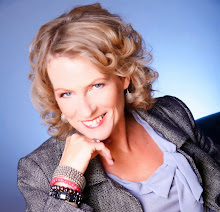
- Isla Baliszewska
- The business bit: I have had 25 years experience in the IT sector encompassing equipment finance to computer recycling. The coaching bit: is about delivering business mentoring and personal performance coaching. My clients range from senior executives to the unemployed and I delight in working with them all to build excellence and promote growth. My specialisms are working with business leaders and entrepreneurs who want to grow their businesses and enjoy themselves in the process, and helping individuals to realise their full potential. I also work with young people to build confidence and life skills so they can grasp life's opportunities and make the right life choices.
Monday, 13 August 2012
Saturday, 16 June 2012
Holiday Freedom?
How many times have you wanted to unleash unspeakable
violence on your holiday partner’s Blackberry/iPhone/Android/ while trying to
relax on a tranquil beach enjoying your holiday? Or maybe it is you sitting/lying there with
your fingers welded to the keypad, your ear finely tuned to the gentle
insistent ringing of your mobile, not able to chill as you need to be on alert
in case ‘the office’ should call.
Heard of the Workcation?
Some of the 72% of business owners that can’t take time off without
leaving their work behind are now taking these, just so they can keep an eye on
their businesses. Goodness, what are we
becoming? Addicted to ‘noise’, constantly in ‘plugged in’ mode, making up
things to think about in case we catch ourselves not thinking about things to
think about?
Mindfulness is trendy now.
In a business context it has been shown that increases in mindfulness
are associated with increased creativity and decreased burnout and an increase
in productivity. [1] [2] In the education field studies presented in The Power of Mindful
Learning [3] show that increasing mindfulness in learning, be it academic subjects,
sport or music, encouraged participants
to use objects more creatively and move
away from mindsets that hamper competence in learning. One study demonstrated that telling people
to mindfully notice new stimuli improved attention and memory.
Let’s reframe the way we are when we are supposedly ‘on
holiday’. Freeing our minds, finding
that freedom and personal space we used to have years ago before the digital
age forced us to be constantly accessible to everyone 24/7. Let’s learn to
stop, disengage and chill. Replace the digital
with daydreaming, the internet with introspection, texting with taking time
out, emailing with easing off ,
messaging with mindfulness. Not only
will we find ourselves being much more energised and creative when we return to
work, we will be a far nicer person to be with on holiday!
[1] (e.g., Langer, Heffernan, & Kiester, 1988) [2] (Park, 1990) [3] (Langer, 1997)

Friday, 11 May 2012
Innovatively Innovative Teams
Research constantly shows that people working individually come up with more ideas than when working in groups. So why are we always striving to get the best out of teams - why don't we just separate everyone off into little private working areas and leave them to it? It would create a pretty unsociable and tedious working environment although we might get a lot of ideas for a while before everyone went doollaly with their own company.
The problem is that we put teams together to find the solution to problems. What we should be doing is turning this on its head. An example: A practice meeting at a doctor's surgery aimed at improving the patient experience. Instead of asking, how can we make things better, ask 'how can we make things really uncomfortable and unpleasant for our patients?' Suggestions could include: reduce the number of chairs in the waiting room; do away with parking spaces; make checking in difficult by only having one receptionist; ensure the phone is not answered until it has rung 20 times. For every difficulty thus created, get the team to find the opposite. So.....create more seating in the waiting room, address any parking shortages creatively, consider computerised check-in, put the phones on automatic answer if the receptionists are busy with a lovely polite message and a call-back option.
Genrich Altschuller had a Theory of Inventive Problem Solving (sounds great!) created from researching loads of inventions and the process in their creation. He found that innovations used scientific effects outside the field of their own development. So if we break down successful products or inventions into their separate components we can use these as 'pre-inventive' ideas with which to create new innovations.
Getting away from the technical and back to the teamwork, if you put people together working dynamically, distinctly and using their different knowledges and expertise to explore the component parts of an issue, you can get some really fabulous collaborative and innovative work.
“Creativity involves a large number of people from different disciplines working together to solve a great many problems,” he writes. “Creativity must be present at every level of every artistic and technical part of the organization.” Ed Catmull - President Pixar and Disney Animations.
Come visit Yourcoaching to get some good ideas.
Friday, 30 March 2012
Calling all entrepreneurs - to leap or not to leap?
Jeff Bezos asked his boss at the hedge fund where he was Senior Vice President, whether he should give up his job to start up a business selling books on the internet. His boss said "That sounds like a really good idea, but it would be an even better idea for someone who didn't already have a good job."
This is a dilemma faced by many entrepreneurs who have a great idea and have to make the decision about whether to take the leap. It took Jeff Bezos 48 hours after that feedback from his boss. His company Amazon, now employs 56,200 people and is valued at about $80billion.
A graduate from the Young Entrepreneur 12 Steps to Success programme recently said " Going to two job interviews after learning about risks, turning down the first job in the hope of being offered the second one which I thought would have a better future - and it has - and thanks to that - I have. It was the best decision that I made in my life last year!"
What stands in your way of taking the leap are probably concerns around having the conviction that your idea will work, doubting that you have the ability to find clients, feeling that you 'ought' to be doing a regular job (especially if there are other people dependent on you) or just the fear of making the wrong decision.
A word of advice from someone who leaped "The key is to just get on the bike, and the key to getting on the bike… is to stop thinking about ‘there are a bunch of reasons I might fall off’ and just hop on and peddle the damned thing. You can pick up a map, a tire pump, and better footwear along the way. - Dick Costolo, founder of Feedburner.com and CEO of Twitter.
For help with leaping big, take a small leap and talk about it.
Monday, 5 March 2012
Regrets
For those of you who missed this as it was reported a few weeks ago.....A recently published book written by a palliative care nurse has attracted huge interest in the press. Bonnie Ware spoke to many dying patients and she wrote about the top 5 most commonly held regrets she heard:
* I wish I'd had the courage to live a life true to myself, not the life others expected of me.
* I wish I hadn't worked so hard.
* I wish I'd had the courage to express my feelings.
* I wish I had stayed in touch with my friends.
* I wish that I had let myself be happier.
We live in a world of shallowness and superficiality and yet we are worried about deep issues connected with making our lives meaningful and fulfilling.
"You are the only real obstacle in the path to a fulfilling life".
Les Brown
"How soon 'not now' becomes 'never' "
Martin Luther
Life isn't about waiting for the storm to pass - it's about learning to dance in the rain.
Friday, 2 March 2012
Sex and Getting On
Throwing up a few interesting questions to provoke a bit of debate:
Is it okay for Laura Maggi to wear revealing clothes to attract customers into her bar in Italy - much to the chagrin of her male customers' womenfolk? Her business has done rather well since she introduced the new dress code.
What about Putin using his pecs to attract (presumably) the female vote? And in Australia a lot of men are surprisingly interested in applying for the job to test brothels?
Confusing moral issues? Or just humans doing what they've always done to get ahead or get pleasure from their work!
Tuesday, 7 February 2012
Too many Aspirations
Do we aspire to too much?
Twenty or thirty years ago we didn't have so much to yearn for, we were more contented with what we had. Now we have so much choice, so many options, how can we know when to stop wanting? It's worth noting that we are prone to set goals, then when we reach them we pick up the goal posts we've set and run with them to a new point, without marking the achievement.
One option then to sort out this business of 'over-aspiring' - get some personal coaching!
And some other options:
- Celebrate every goal you achieve in a recognisable manner and take time before setting new goals.
- Surround yourself with the kind of people you need to support you in your journey towards a goal. The more people you involve in your aspirations who are going to be there for you, the more recognition of your success you will have once you get there.
- Do some work on identifying what it is you REALLY want to achieve in your life. Getting a pay rise might buy you a flashier car, it might buy you more free time, it might buy you status...what did you want it to buy you? Work that out and you might find out your true aspirations.
- Be optimistic but realistic about your aspirations. Don't stop dreaming, just be aware of where you are on your path to them.
"The true worth of a man is to be measured by the objects he pursues"
Marcus Aurelius
Subscribe to:
Posts (Atom)