About Me
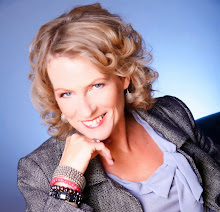
- Isla Baliszewska
- The business bit: I have had 25 years experience in the IT sector encompassing equipment finance to computer recycling. The coaching bit: is about delivering business mentoring and personal performance coaching. My clients range from senior executives to the unemployed and I delight in working with them all to build excellence and promote growth. My specialisms are working with business leaders and entrepreneurs who want to grow their businesses and enjoy themselves in the process, and helping individuals to realise their full potential. I also work with young people to build confidence and life skills so they can grasp life's opportunities and make the right life choices.
Tuesday, 29 June 2010
TEAM UPDATE
The Swindon Coaching Team next meet up at Swindon Connections on Thursday 8th July at the Madison Hotelin Swindon. Be there to meet some interesting people!

Tuesday, 8 June 2010
SWINDON COACHING TEAM - Next Drop-in session
Our next free drop in coaching evening is going to be on 1st July at a yet to be decided on venue in Swindon. It would be interesting to get feedback on what the preferred good bars are for Swindonians...post your views if you have some good suggestions.
Thursday, 20 May 2010
STRESS AND SANDWICH WOMEN
Stress and Sandwich Women
At an evening networking meeting not so long ago I was talking to a bank manager about the stresses people were experiencing as a result of the recession and how hard we were all having to work to make ends meet. He bemoaned his long day which had started with a breakfast meeting and would finish when he got home at about 8pm. Happy man! My day had also started early, 6.30 to be precise, preparing breakfast, getting my son off to school (making lunchbox, checking games kit etc), fitting in some rushed cleaning and house-tidying, flinging some clothes in the washing machine before heading off to start work at 8.30. Into my working day I squeezed minor but essential tasks – renewing the car tax, calling the vet, checking in with older children who are both at university and quite a lot of other stuff, and then a visit to my very frail, housebound elderly parents-in-law. And my day was going to end not at 8pm after the meeting, but after I had spent some time with my son talking about his day, homework etc, hanging out the washing and clearing up the supper dishes – oh, and getting ready for the next day. A typical day in the life of a middle-aged woman!
In 1981, Dorothy Miller coined the term “sandwich generation” to refer to those middle-aged people who find themselves supporting both young and older family members. Crucially her definition stated that the sandwich generation did not receive reciprocal support from the people they cared for. And in 1998 research by Maaike Dautzenberg and others pointed out that most of these intergenerational caregivers were “often women dealing with the complex role configurations of wife, mother, daughter, caregiver, and employee”.
So a big welcome to all you Sandwich Women!
Most of us cope reasonably well with combining the demands of looking after those who rely on us and our work life pressures. But sometimes just trying to be ‘normal’ about it all can be just too hard. Marian Keyes blogged about her depression earlier this year and the Daily Mail columnist Allison Pearson shared her experiences in the Daily Mail under the heading “Depression's the curse of my generation and I'm struggling in its grasp”.
The Health & Safety Executive has a big push on at the moment around stress, depression and anxiety in the workplace, which is just one of the arenas inhabited by the sandwich woman. What would be really good is to know that there is support and help in the other areas of our lives. But part of our problem lies in the fact that we sandwich women facilitate the lives of our dependants so well that in a way we are disempowering them from taking a part in our own welfare. So perhaps we might step back and review just how much of what we do we might be able to devolve or delegate. In my case, as a widow with no husband to share the load, I share the care of my elderly parents-in-law with a close family friend. Without her input my intergenerational care load would be unbearably heavy.
With so many roles you might have as a carer, supporter, breadwinner, facilitator, not to mention all the secondary ones like driver, cleaner, receptionist, cook, etc, if you feel overwhelmed, under resourced and lacking in support this can so easily lead to feelings of tiredness, lethargy, lack of motivation, anxiety, indecision or loss of appetite and insomnia. These are just some of the things that could flag up the onset of depression and the effects of stress. Before you get here try to put in place some safety valves, talk to someone, look for support, explore options of what you could say no to without increasing your stress levels. And try some simple techniques like meditation and deep breathing to get some space and give you some minutes to yourself.
Tuesday, 6 April 2010
BE MINDFUL - BE VERY MINDFUL...
Mindfulness techniques
Mindfulness, meditation, awareness – what’s the difference?
Mindfulness is present awareness and mindful meditation is distinct from concentration meditation, where we focus concentration on a particular object. Mindfulness in everyday life is about being aware of how we are in the present moment, and in mindful meditation every aspect of our experience is welcomed and acknowledged and we are able to know it is there without it being judged or assessed as defining us as individuals.
Studies of mindfulness in a business context have shown that increases in mindfulness are associated with increased creativity and decreased burnout (e.g., Langer, Heffernan, & Kiester, 1988). A study with businessmen in Korea found an increase in productivity as well (Park, 1990).
Studies in the education field presented in The Power of Mindful Learning (Langer, 1997) show that increasing mindfulness in learning, be it academic subjects, sport or music, encouraged participants to use objects more creatively and move away from mindsets that hamper competence in learning. One study demonstrated that telling people to mindfully notice new stimuli improved attention and memory.
So here are some techniques for trying to increase your mindfulness....
1. RAIN – (Tara Brach – Radical Acceptance)
R – Recognise when you feel a strong emotion
A – Acceptance – acknowledge the emotion to be there
I – Investigate the feeling deeply, how it affects your body, feelings and thoughts
N – Non-identify what is there by seeing that it is a passing emotion or state of mind and does not define who you are.
2. STOP – (Elisha Goldstein – A Mindfulness Stress Reduction Workbook)
S – Stop what you are doing.
T – Take a breath – concentrate on breathing in and out naturally.
O – Observe what you are feeling and thinking. Name your emotions. Acknowledge your thoughts and let them pass on.
P – Proceed with something that will help you at that time, i.e. continue deep breathing to aid relaxation, talk with a friend, go for a walk.
3. What are you doing?
Start focusing on how you do particular things. When you are driving how are you sitting, how are you holding the steering wheel, what are you observing, what are you thinking?
What happens when you are eating – are you savouring each mouthful, what are you tasting? Are you eating quickly? How are you sitting?
Practice being more aware of ‘how you are’ when doing normal or habitual activities to build mindfulness of ‘how you are’ in your life generally.
4. Breathing
Breathing is central to your mindfulness practice. Breathing can undo the tensions created by inner emotions, relax stresses and restore balance.
Start by noticing your breathing, put a count on it – how many counts to the in-breath and how many counts to the out-breath. Is there a pause between breathing in and breathing out? Establish a comfortable count, say 4 in and 4 out. Then add a little pause between the in and out breaths, say a count of 2. Experiment with other counts, try a pause after the out-breath. On the out-breath feel your abdomen rising and then your chest . Let your breathing be soft and gentle and natural.
.....or try a mindfulness meditation class or a yoga class...
Sunday, 14 March 2010
Women are 'web thinkers'....
Web thinking Women
Every day women juggle their different ‘jobs’ and duties and manage to do several different things at the same time. Or so it seems. ‘Multi-tasking’ is our strength. It’s interesting that the BT ad on TV has Kris Marshall (from My Family)calling his mother while walking/cooking/etc. That’s usually the woman’s role.
Studies say that what we are actually doing is swapping between contexts. Some research suggests that this is not necessarily a good thing in that it we are not really concentrating properly on any one task. Linda Stone, a writer who worked at Apple Computer, coined the term ‘Continuous Partial Attention’ to describe this type of information processing.
"It usually involves skimming the surface of the incoming data, picking out the relevant details, and moving on to the next stream. You're paying attention, but only partially.
Harold Paschler said that we can perform some tasks simultaneously without difficulty e.g. we can regulate sensory input while performing information retrieval, however in trying to perform more difficult tasks at the same time we lose effectiveness in processing these tasks.
But we women know we really are effective! Helen Fisher in her book The First Sex explained how women are more able to think contextually and can tolerate ambiguity better. She theorises that women are able to consider more variables, options and outcomes when decision making and finds that this is most obvious in an office environment. Women pick up on little nuances and non-verbal cues, object positions, body postures and so on and use this absorbed information to help them in their decision making.
Helen Fisher calls this ‘web-thinking’ where women have a broader perspective in their way of processing information that enables them to integrate lots of different facts, rapidly retrieve and selectively analyse these and plan the next step accordingly.
So next time a ‘step-thinking’ man challenges your ability to think clearly, remind him that you can take in a lot of information quickly, rapidly recall the bits that matter and use them effectively!
________________________________________
Harold Paschler – Dual-Task Interference in Simple Tasks: Data and Theory Psychological Bulletin 1994 Vol. 116 No 2 220-244
Helen Fisher - The Natural Talents of Women and How They Are Changing the World
Wednesday, 3 March 2010
Somewhere you want to be on 23rd March 2010 . . .
Somewhere you want to be on 23rd March 2010 is the Old Bank Wine Bar in Wood Street, Old Town, Swindon. The newly formed Swindon Coaching Team are hosting their first FREE drop-in evening so for the cost of a coffee or a glass of wine you can come along and meet some great coaches, find out about coaching and try it out.
The Team coaches come from a wide range of backgrounds and have a diversity of skills and expertise ranging from business and career coaching to psychotherapeutic and relationship coaching. We are a very friendly and inspiring group - and look forward to seeing you there!
The Team coaches come from a wide range of backgrounds and have a diversity of skills and expertise ranging from business and career coaching to psychotherapeutic and relationship coaching. We are a very friendly and inspiring group - and look forward to seeing you there!
Wednesday, 23 September 2009
Train to Gain Funding & TFT
This month an introduction to a fascinating new energy psychology method, Thought Field Therapy and also details of Yourcoaching's involvement with Train to Gain funding.
Introducing TFT
Having a quick self help technique to use when we are feeling tense and anxious about something, perhaps an impending exam or presentation, a difficult meeting or a public performance, can really make a difference for how we deal with that situation. TFT is such a technique and this month you can read about how beneficial it is and how it works.
Thought Field Therapy (TFT) is as a non-invasive treatment used to eliminate the cause of negative emotions. It was founded and developed by Doctor Roger Callahan, a clinical psychologist who began his discoveries with sensory-based observations of actual phenomena treating patients with anxieties and phobias.
The treatment works by tapping with the fingertips to stimulate certain meridian energy points in the body. This is done while the patient is ‘tuned in’ to their problem. The negative emotions giving rise to the particular issue lie in the disruption of the body’s energy system, so by tapping on the meridian points in a particular sequence, the energy is redirected.
Dr Callahan devised a menu of tapping sequences relevant to different emotional problems including anxiety, phobia, obsessive compulsive disorder and trauma.
The great thing about TFT is it can be used to help enhance performance and the rapid elimination of panic or high anxiety associated with high stress situations. Learning how to ‘self-tap’ is a superb tool for countering exam nerves, anxiety over public speaking and presentations, or sporting performance ‘block’.
TFT has been used to provide trauma relief in the USA, Mexico and Africa, helping people use techniques that do not require long term therapy. For more information visit www.atftfoundation.org.
Step Into Your Personal Power – Workshop 18th October 2009 10am – 4pm
For those of you who want to claim your ‘self’ and realise your real potential in a realistic way, this is the workshop for you. Take a reality check, work on your strengths and build foundations for change and personal growth.
To sign up for this workshop at the Wellbeing Clinic, 6 London Road, Marlborough SN8 1PH call 01672 513583 or 01672 861565 or log on to www.thelondonroadwellbeingclinic.co.uk. Places are limited so booking is essential.
Wellbeing Clinic
In my capacity as in-house coach for the Wellbeing Clinic in Marlborough, on 11th September Jill Sudbury, proprietor of the Clinic, and I helped facilitate at a Mental Health and Wellbeing seminar at the Wiltshire Constabulary headquarters. The seminar aimed at raising awareness of mental health issues and the various types of help and resources available to support sufferers. The event was well attended, very informative and thought provoking with a stimulating program of talks and activities covering occupational health, counselling and complementary treatments. A very forward thinking and progressive event organised by Wendy at the Constabulary.
Train to Gain
Yourcoaching has been offering Train to Gain leadership and development programs for some time and this is such a valuable resource available to small businesses that we have given a little reminder of it here. Summer is a good time for businesses to review their progress and growth plans and take advantage of what is out there to help deal with issues and grow the business. You can also run through our Quick Business Diagnostic Tool.
A little more information on the Train to Gain grants available for businesses:
This Government funded project is aimed at businesses for leadership and management development to help businesses:
Boost efficiency
Increase performance and profits
Enhance staff motivation and confidence.
The funding available consists of a £500 grant and a further £500 on a match funding basis.
To be eligible the following criteria apply:
You employ between 5 and 249 full time equivalent staff
You will undertake a skills review to confirm your requirements
The program must be leadership and management related
The training must be paid for, started and your claim submitted within three months of your meeting with the adviser from Train to Gain
If you would like more information please just get in touch and we will help you access your
Train to Gain funding and tailor the right program for you.
www.businesslink.gov.uk/southwest/leadershipandmanagement
We hope you enjoyed this month’s newsletter, please click here to send us your feedback.
Subscribe to:
Posts (Atom)