Last year we were told by a piece of NatCen research that we are taking more responsibility for our lives. Today we are told that Britain has an 'integrity crisis' as we (especially the young) are less honest than we were 10 years ago.
To what do we owe this emerging 'dishonestly self-reliant' behaviour? How do these two facets merge? The NatCen study inferred that we are becoming more self-reliant as a result of struggling with the recession and financial difficulties, feeling less able to trust those who make decisions for us i.e. the Government. The author of the University of Essex study suggested that we were becoming more dishonest because we have poor role models. Who are we talking about here? Celebrities, footballers, politicians?
In any time of difficulty there is a tendency to build defences, to self-protect, to question and mistrust. But there is also a welcome tendency amongst some of us towards selflessness and the general good, echo those who came out and joined together after the summer riots last year to clean up their neighbourhoods.
Whatever your lines of morality are about whether to keep the overpayment you receive from the shop cashier (does it depend on whether it is an independent or a chain?), keeping a perspective on how your actions affect others might be the issue. Contextually it might make no sense at all to be rigidly honest and 'good' if someone is going to be hurt or damaged. Mavis Cheek's heroine Nina Porter in her book 'Truth to Tell' comes a cropper with the truth. On the other hand, truth and honesty are the basis of trust and that is what we need to feel sure of when we are battling adversity. It seems this whole business about self-reliance and honesty is more about being understanding of others and how what we do affects them, as 'they' are our society and what happens to them affects us. And sometimes we need to be able to trust those we don't know particularly well.
So..easy solution. Roll up all you celebs and footballers and politicians and famous folk and dust down your behaviours and be seen to care about real stuff that matters! Show us you've got the right perspective and can add some social capital gloss! After all, it's evident we can't seem to run our own lives without you!
About Me
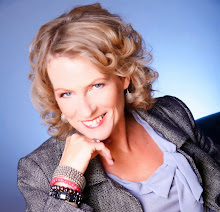
- Isla Baliszewska
- The business bit: I have had 25 years experience in the IT sector encompassing equipment finance to computer recycling. The coaching bit: is about delivering business mentoring and personal performance coaching. My clients range from senior executives to the unemployed and I delight in working with them all to build excellence and promote growth. My specialisms are working with business leaders and entrepreneurs who want to grow their businesses and enjoy themselves in the process, and helping individuals to realise their full potential. I also work with young people to build confidence and life skills so they can grasp life's opportunities and make the right life choices.
Wednesday, 25 January 2012
Monday, 5 December 2011
Being 'nice' AGAIN...
It's official (again). Being nice and agreeable doesn't pay. We've been told that 'agreeable' people on average earn less promotions and pay-rises than disagreeable people. A year ago I blogged about Martin Kihn's "I got Rich and Happy by Not Giving a S*** About You'. Seems nothing's changed....
No, no, no! We are not taking that sitting down. It isn't 'niceness', it's how good you are at putting your case or fighting for your promotion/pay rise/right to reply etc. So it's really about being STRONG. Heed that!
No, no, no! We are not taking that sitting down. It isn't 'niceness', it's how good you are at putting your case or fighting for your promotion/pay rise/right to reply etc. So it's really about being STRONG. Heed that!

Tuesday, 8 November 2011
Faithfulness in a recession
Omar Gilith at the University of Kansas says that men seek more mates in a threatening environment just in case they need to keep their options open in a biological drive for survival.
Helen Fisher said that women's excellent 'web thinking' developed in response to our female ancestors having to contend with a myriad of threats while rearing children in a dangerous environment.
So which would you rather have to cope with in a recession, your philandering man telling you he is playing away for survival or your multi-tasking lady telling you that she is protecting her offspring? (Oh, and by the way apparently women are better able to tolerate ambiguity....)
Get some balance in your life!
Monday, 17 October 2011
What now the youth of today?
Dame Joan Bakewell says Sunday School will do it, learned professors say improving the standard of children's handwriting lessons at school would help, and other erudite professionals say the blame lies with too much digital technology time.....make our children better people, that is.
It seems we overindulge our kids, we don't spend enough quality time with them, don't instil a proper sense of discipline in them and we don't teach them respect. Woe is the lot of the modern parent! On the one hand we need to be like the ChineseTiger Mother Any Chua, on the other we should be like Laura Skenazy with her free range parenting. Make your choice, and attend to George Bernard Shaw's dictum -
Parentage is a very important profession, but no test of fitness for it is ever imposed in the interest of the children.
Monday, 5 September 2011
Dignified work
Today is Labor Day in the US (note US spelling) which celebrates the contribution of workers socially and economically and "the strength and esprit de corps of the trade and labor organisations" - (US Department of Labor).
And how about across the waters in the UK? How are we celebrating our workers?
After 3 years of trying to recruit for her textile factory Deborah Meadon highlighted the image problem around manual work -"It is about people not being interested in manual work. At 16 or 17 people are still thinking about what is cool..." Certainly the vocational training option in schools has attracted a second tier image over the Aladdin's cave of academic subjects leading to university, even though the latter no longer guarantees employment. In 2009 the Crafts Council audit revealed a severe skills shortage in the UK.
The value we give to vocational learning, 'blue collar' work, skilled craftmanship and manual labour, dictates how we perceive the virtue of ability and skills and informs our relationship with the material world. We've become so used to the convenience and immediate accessibility of everything we need or want, we've forgotton how to 'do' for ourselves.we've become passive and dependent.
Maybe if we put more value on the vocational and manual tasks necessary to our lives, we might not find it so difficult to recruit for essential jobs, young people would have the ability to make real choices about their careers developing their own true potential rather than pursuing a course dicated by the 'shoulds' of others, and we might have a better appreciation and respect of the material assets we so constantly strive to accumulate.
Holby city star Jeremy Edwards hit the headlines when helping a friend in his landscape gardening business - "I really don't see the shame in manaual labour". What a shame he had to say that.
For more about helping young people find the right paths, click here.
Sunday, 21 August 2011
Opportunism or Altruism?
If you found yourself present at a disaster, say a plane crash or the recent riots, what would you instinctively do? Pull out your mobile to film it? Help yourself to some casual looting because everyone else was? Or would you call the emergency services, rush to stop the looting, help those in need?
At the core opportunism is about self interest and making situations work for you, often by taking advantage of others. "One man's opportunism is another man's statesmanship" said Milton Friedman. Ken Livingstone was accused of political opportunism by blaming the riots on a growing social divide created by the Government's spending cuts.
It's very sad to think that we are living in a world where opportunism rules human behaviour. Let's rather look at the examples of intrinsically altruistic behaviour exhibited by such actions as the organised post-riot clean-ups, the Tunisians welcoming the fleeing Libyans into their homes in April, the German roofer Marcel Gleffe who jumped in his boat to help rescue the young people on Utoya.
One interesting thought advocated by researchers is that opportunism diminishes when individuals are part of an organisation with a shared purpose.
Monday, 1 August 2011
SO...We are as smart as we are going to get?
It appears that we, we being us humans, may not get any cleverer. Recent research suggests that now we have pretty much optimum brain connections and any more increase in brain power from building new connections would require a massive energy consumption. This energy requirement therefore limits the performance and design of our brains. This makes for good discussions on intelligence!
Subscribe to:
Posts (Atom)